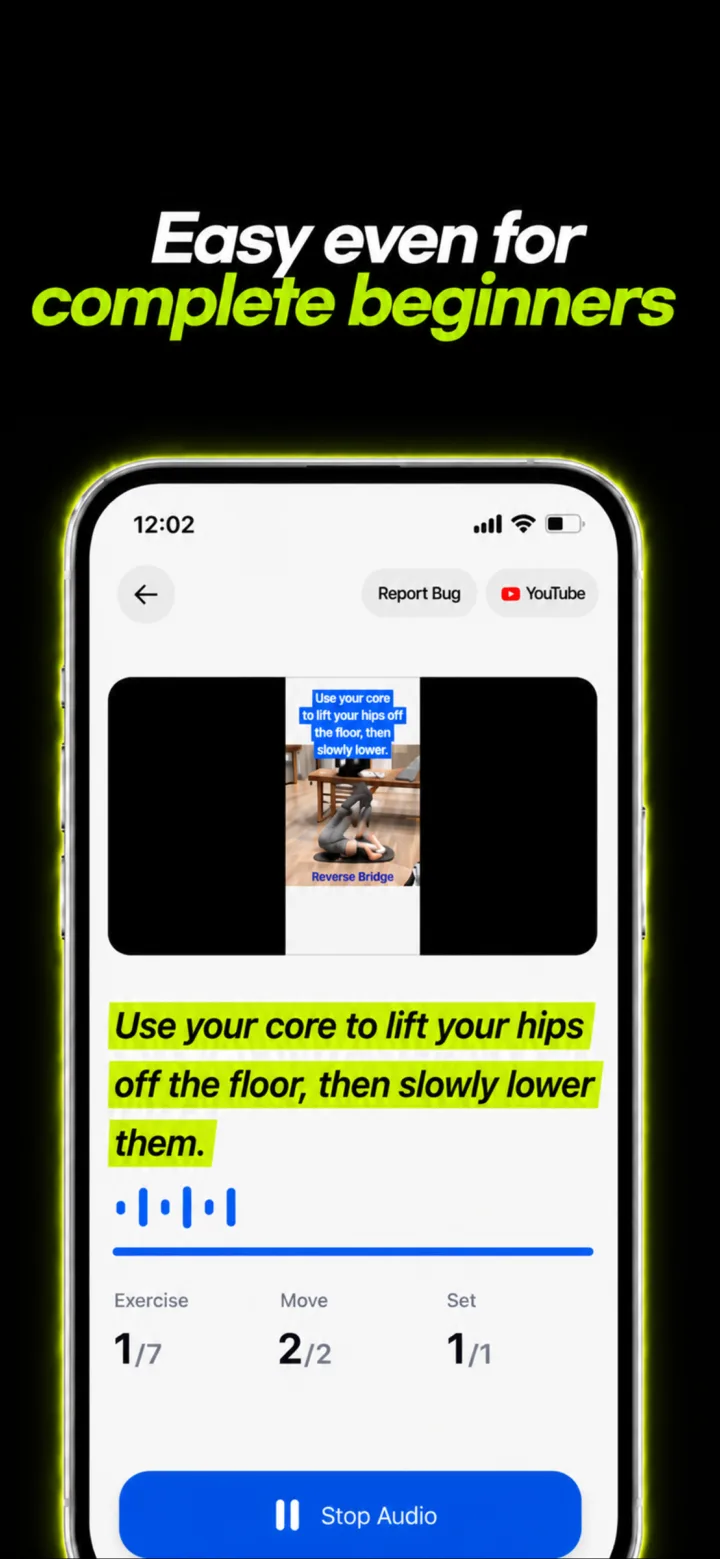
When your head feels like it keeps drifting toward the screen, pulling on the neck alone is not always the easiest place to start. A calmer first step is to reduce the tension at the base of the skull, then help the shoulder blades and rotator cuff share more of the posture work.
This routine takes about 3 minutes. It starts on your back with a gentle neck release, moves into a hands-and-knees shoulder-blade drill, and finishes with light cuff control while lying on your side.
When to try this
Try it after a long computer session, after phone scrolling, or whenever your neck and shoulders feel like they are carrying your posture for you. It works best when you keep the effort easy and focus on neck comfort, shoulder-blade motion, and slow control.
This is a general wellness routine. If symptoms are ongoing, intense, or linked with arm symptoms, work with a qualified clinician.
How this sequence fits together
The routine starts with Suboccipital release because easing the base of the skull can make the next movements feel less guarded. Push-up Plus Progression then brings attention to the shoulder blades, and Pad cuff finishes with small rotator cuff control so the shoulder is not passive under the neck.
Routine breakdown
| Order | Move | Focus | Equipment |
|---|---|---|---|
| 1 | Suboccipital release | Base-of-skull tension and gentle chin motion | Massage ball |
| 2 | Push-up Plus Progression | Shoulder-blade protraction and upper-back control | None |
| 3 | Pad cuff | Light rotator cuff control | Small pad or cushion |
1. Suboccipital release
This move comes first because it gives your neck a quieter starting point before you ask the shoulders to work. Keep the pressure mild and use the chin motion to find small, controlled movement rather than forcing a stretch.
Lie on your back and place a massage ball under the base of your skull. Slowly tuck your chin up and down, staying focused on gentle pressure, easy breathing, and the area just under the back of the head.
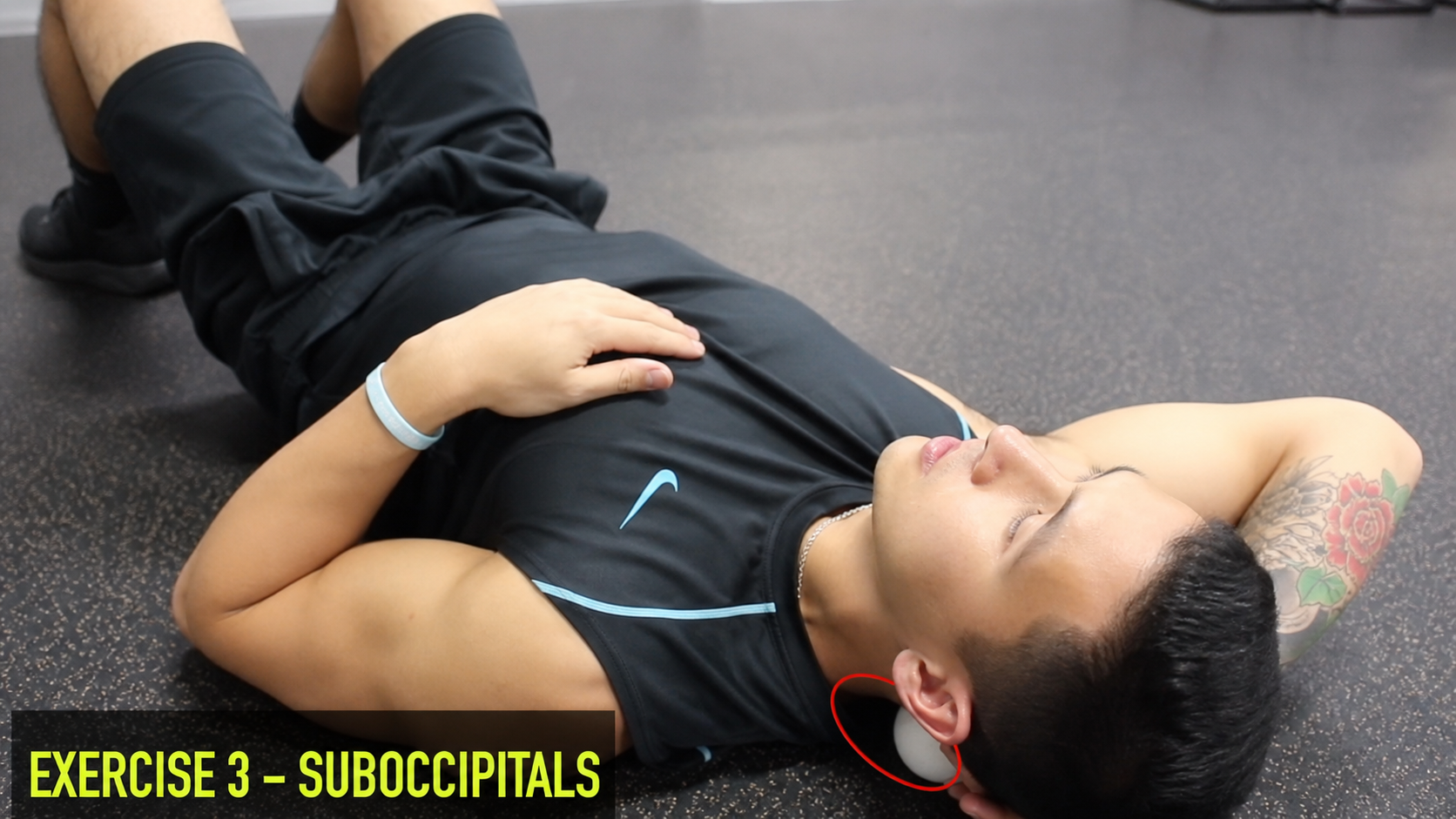
- Set up: Place a massage ball under the base of your skull while lying on your back.
- Do: Slowly tuck your chin up and down for 10 breaths.
- Watch for: Do not press so hard that your jaw, face, or neck tightens.
2. Push-up Plus Progression
This move is placed second to shift the routine from passive neck relief into active shoulder-blade control. The goal is not a hard push-up; it is to feel the shoulder blades glide around the rib cage with smooth upper-back motion.
Start on all fours, pinch your shoulder blades together as your chest lowers slightly, then protract the shoulder blades to push your upper back toward the ceiling. Keep the elbows soft and focus on shoulder-blade reach without shrugging.
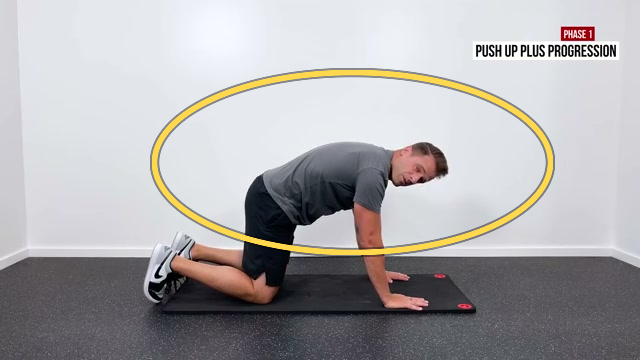
- Set up: Start on all fours with hands under the shoulders.
- Do: Protract the shoulder blades for 10 controlled reps.
- Watch for: Keep your neck long; avoid dropping your head between your shoulders.
3. Pad cuff
This final move adds light rotator cuff control after the shoulder blades are awake. It helps you finish with a sense of shoulder support instead of relying only on the neck to hold your posture.
Lie on your side with a small pad or cushion between your elbow and torso. Lift the forearm into external rotation with a small range you can control, keeping the elbow connected to the pad and the shoulder relaxed.
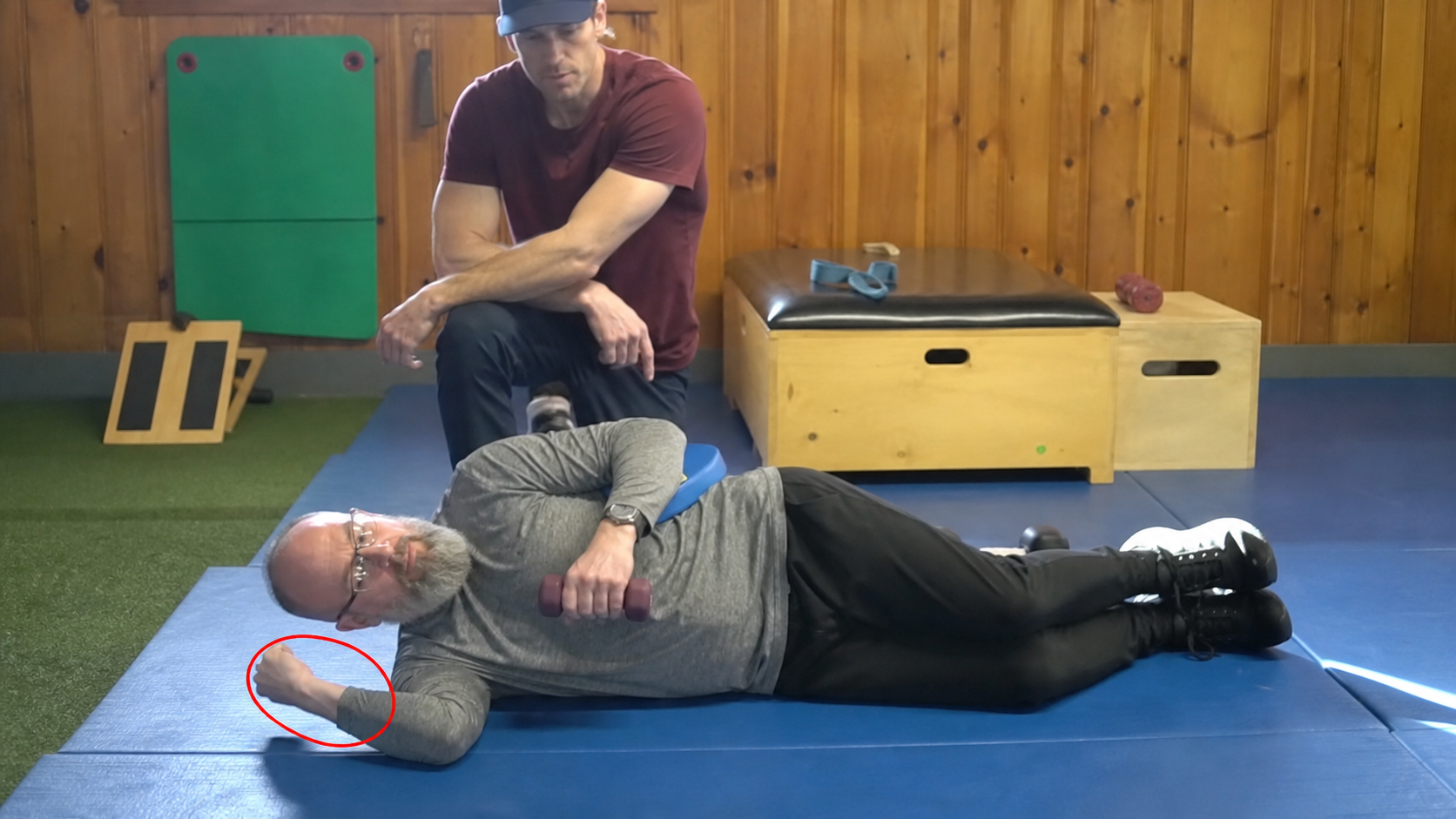
- Set up: Lie on your side with a small pad or cushion between your elbow and torso.
- Do: Lift the forearm for 5 controlled reps.
- Watch for: Keep the shoulder down and avoid twisting the torso to make the movement bigger.
Why save this routine
Save this routine when you want a short reset that starts gently and then asks the shoulders to participate. It is especially useful on days when your neck feels overworked from sitting, but you do not want a long workout.
Stop criteria
Stop the routine if neck pain increases or becomes sharp. Stop immediately if numbness, tingling, dizziness, headache, or unusual discomfort appears.
Who this routine is for
- People who feel their head drifting forward after long screen sessions
- Desk workers who want a short neck-and-shoulder support routine
- Beginners who prefer gentle floor and shoulder-control movements
Frequently asked questions
What is a short routine for forward head posture support?
Start by easing tension at the base of the skull, then add shoulder-blade and cuff control so your neck is not doing all the work. Key movements include Suboccipital release, Push-up Plus Progression, Pad cuff. It takes about 3 minutes. Stop and check your body first if you feel pain or discomfort.
How can I combine neck release with shoulder blade control?
Start by easing tension at the base of the skull, then add shoulder-blade and cuff control so your neck is not doing all the work. Key movements include Suboccipital release, Push-up Plus Progression, Pad cuff. It takes about 3 minutes. Stop and check your body first if you feel pain or discomfort.