Many people can do crunches but lack true core control and bracing ability. This routine focuses on the fundamentals: lateral bracing, diaphragmatic breathing with core engagement, and lower ab activation.
You will do lateral abdominal bracing, 90-90 supine breathing, and seated leg lifts. The session takes about 4 minutes and builds the foundation for better core function.
When to try this
- You want better core awareness and the ability to brace properly
- Your lower abs feel weak or disconnected
- You are looking for a short daily core control practice
If you have existing back or neck issues, consult a professional.
Why this sequence works
- Lateral Abdominal Bracing teaches true 360-degree core stiffness.
- 90-90 Supine Breathing with Arm Support connects breath to deep core activation.
- Seated Leg Lifts build lower ab strength and control without spinal stress.
Routine breakdown
| Order | Move | Focus | Equipment |
|---|---|---|---|
| 1 | Lateral Abdominal Bracing | 360 core bracing awareness | None |
| 2 | 90-90 Supine Breathing with Arm Support | Breath + deep core connection | Bench or chair |
| 3 | Seated Leg Lifts on Chair | Lower ab strength and control | Chair |
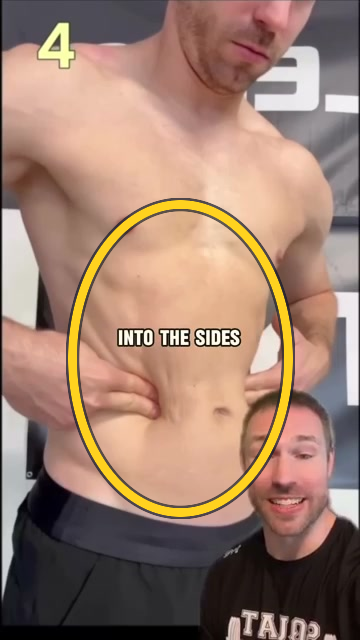
1. Lateral Abdominal Bracing
Find a neutral spine alignment by pulling your ribs down and place your fingers into the sides of your waist. Use your abdominal muscles to push your fingers out laterally, creating stiffness throughout your core. Breathe while maintaining tension. Perform the prescribed holds or reps.
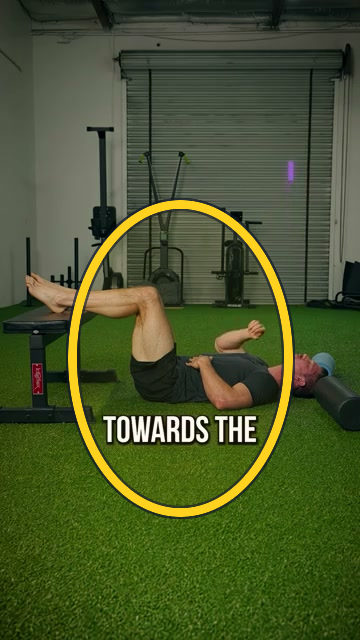
2. 90-90 Supine Breathing with Arm Support
Lie on your back with legs on a bench at 90 degrees and elbows supported at shoulder height. Open your mouth, relax your jaw, and exhale fully for 5-10 seconds until side abs engage. With tongue on roof of mouth, inhale through the nose without neck tension. Perform the prescribed breathing cycles.
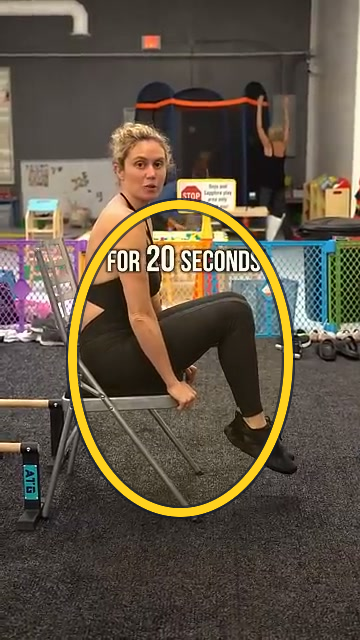
3. Seated Leg Lifts on Chair
Sit on the edge of a chair and grip the sides for stability. Lift your feet off the ground and hold, progressing by straightening your legs or lifting higher. Keep your core braced and avoid arching your lower back. Perform the prescribed reps or holds.
Why save this routine
- Builds real core control and bracing ability (not just crunches)
- Improves breath-to-core connection
- Strengthens lower abs with minimal spinal stress
- Excellent foundation work for all other training
Stop criteria
- Sharp pain in the lower back, hips, or neck
- Excessive neck tension during breathing work
- Stop if you feel instability or discomfort in the lower back
Who this routine is for
- People wanting better core awareness and bracing
- Those with weak lower abs or poor mind-muscle connection
- Anyone looking for a short daily core control routine
Frequently asked questions
How to improve core control and ab engagement at home
Targeted core bracing, breathing, and lower ab activation for better stability and mind-muscle connection. Key movements include Lateral Abdominal Bracing, 90-90 Supine Breathing with Arm Support, Seated Leg Lifts on Chair. It takes about 4 minutes. Stop and check your body first if you feel pain or discomfort.
Best core bracing and breathing routine
Targeted core bracing, breathing, and lower ab activation for better stability and mind-muscle connection. Key movements include Lateral Abdominal Bracing, 90-90 Supine Breathing with Arm Support, Seated Leg Lifts on Chair. It takes about 4 minutes. Stop and check your body first if you feel pain or discomfort.